Sunday, July 28, 2024

Abortion and Reasoning

@nathan.nobis Abortion and "top down" thinking. #abortion #ethics #philosophy #prochoice #prolife #theory #criticalthinking #reason #logic #rationality ♬ original sound - Philosophy 101 - Prof. Nobis

Should Evangelicals Support IVF?

Should Evangelicals Support IVF?

Reposted from the Practical Ethics blog. 

A summary: it turns out that natural miscarriage is *very* common. (Maybe half of all fertilized eggs are miscarried.) That fact should change how evangelicals and other pro-lifers think about IVF. Contrary to their recent calls for banning IVF, evangelicals may have especially strong reasons to support and invest in it.
It's a good reminder that the world is a surprising place. It's important to think carefully because the opinion of your in-group can easily be mistaken.

written by Christopher Register

Evangelicals and other pro-life advocates have underappreciated reasons to support in vitro fertilization (IVF) and funding for maternal health and reproductive technologies in general. 

These reasons stem from the surprisingly high rate of natural miscarriage. I suggest that advances in IVF technology may ultimately lead to fewer total embryos being miscarried or discarded than could be achieved without IVF. This fact should appeal to evangelicals or others who believe that a fertilized ovum has considerable intrinsic moral value.

Since the judicial overturn of Roe v. Wade in June of 2022, opposition to IVF in the U.S. has grown. Just last month, a prominent group of U.S. evangelicals, the Southern Baptist Convention, voted to condemn IVF, even advocating that the government ban the procedure. The central argument of this blog post is that they may be making a mistake, even on their own terms.

Embryo loss through IVF and miscarriage

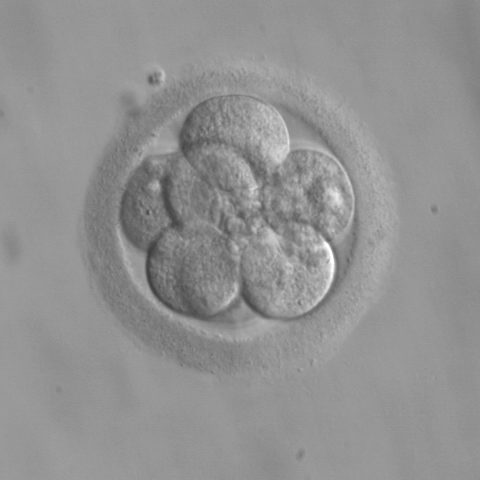
To review the basics of IVF, it involves a human egg being fertilized outside the body. Over the next few days, the egg develops and divides until—having become a group of cells similar to the embryo depicted above—it is either frozen or implanted into someone’s uterus to continue gestating. Typically, the procedure produces about 5-10 embryos in total in case some are not viable, where the frozen embryos that go unused will ultimately be discarded.

For many evangelicals and other pro-life advocates, the main argument against IVF is the same or substantively similar to the argument traditionally levied against abortion: a fertilized human egg is a human being, a human person, or the morally weighty start of a human “life”, and therefore has the same or similar rights and worth as the rest of us. 

Noting that IVF usually involves “discarding” the unused embryos, which then die, those who argue against IVF often assert that it is wrong to destroy or neglect human life, and that it is therefore wrong to create an embryo only later to discard it. For example, speaking in favor of the SBC resolution to condemn IVF, Monica Hall asks, “Most embryos created through IVF die at some point in the process. How could it be considered ethical to create human life knowing death is a probability?” Her answer is that it cannot.

It is understandable that, for people convinced of the value of even early human embryos, the discarding or destruction of such embryos as a part of the IVF process may be genuinely concerning. But, even accepting that concern, there is a surprising but largely unknown fact about human gestation that complicates the picture considerably: that there are many, many unnoticed miscarriages of pregnancy, resulting in the loss or “death” of a fertilized human egg.

Scientists and health professionals estimate that 20% to 80% of all pregnancies end in miscarriage, and the figure is often put at about 50% (for example, here). So, in the natural course of gestation, about half of all fertilized eggs do not survive. So, for every person you know, there was an embryo that was miscarried. As a consequence, if one accepts that a fertilized egg is a “human life” in some meaningful sense, miscarriage ends as many human lives as every other cause of death combined.*

How does this fact complicate the ethics of IVF? To begin, it shows that natural conception is disastrous for human embryos. If a high probability of premature death makes IVF ethically troublesome, then it can make attempts at natural conception problematic too. This is because there is no currently available mechanism for creating and gestating an embryo that doesn’t involve a rather high probability of premature death. If the probability argument–that it’s wrong to knowingly act in ways that have a good chance of bringing an embryo into existence that will soon die–were correct, then it might effectively require anti-natalism, roughly, the view that it is morally wrong to try to conceive and bear children. 

Needless to say, such a controversial view is likely not one that pro-life conservatives would seriously entertain, much less accept. So let us put the prohibition from the ‘probability of (premature) death’ against embryo creation aside: perhaps the continuation of humanity is worth repeatedly putting embryos in perilous situations. 

Still, the absence of a safe mechanism for creating human life doesn’t mean that a safe mechanism is impossible. And even if a completely safe mechanism is impossible, there may still be reason to pursue safer mechanisms—mechanisms of creating human life that reduce the probability of embryo death. Is a safer mechanism possible? I suspect that safer mechanisms will involve current or future IVF technology, along with improving maternal health in general.

How could IVF be safer than natural conception?

To be safer than natural conception, IVF must reduce net embryo loss. With current technology and practices, IVF almost always results in the loss of multiple embryos, and so it’s likely only a safer mechanism for a subset of the population—individuals who are likely to conceive more than about 5-10 times for each successful gestation. Given that many people try for years without a successful pregnancy, however, it’s not implausible that, even at the current level of technology, IVF is in some cases safer for embryos than technologically unassisted conception. (My own parents tried for about 4 years for me and then about 4 years for my sister.) 

Unfortunately, data about rates of embryo loss per attempt at conception is hard to come by, so it’s difficult to estimate how often IVF is safer. Another practical problem is that it’s difficult to identify the relevant cases in advance. Even so, it’s plausible that, if IVF were prohibited and couples were forced to continuing trying to conceive without the aid of reproductive technology, many people would lose more embryos than if IVF had been available to them.

If IVF technology can be improved in the future, the net benefits of IVF may be higher, expanding the proportion of cases in which it’s the safest available option. With increased funding for research into IVF and maternal health, more advanced IVF technology create fewer embryos, thereby ultimately reducing the loss of human embryos in the process. Just how this might work is complicated, as it depends on many factors to do with the genetics of sperm and egg, the health of human gametes, maternal health, and the process of IVF. As an example, I’ll consider just one factor and the potential net benefit that future IVF may provide over natural conception. 

One way to reduce the number of embryo deaths in IVF involves chromosomal screening. Some estimates suggest that about 50% of natural embryo deaths stem from chromosomal abnormalities known as aneuploidies (having a number of chromosomes that isn’t 46). That amounts to roughly 75 million embryo deaths per year. For comparison, the next highest cause of death worldwide is heart disease, which killed about 30 million people in 2019. If aneuploidies could be addressed during IVF, then IVF could prevent many of these embryonic deaths. 

To spell the argument out, then: at present a high proportion of embryo loss in IVF is likely due to aneuploidies, with a high proportion of aneuploidic embryos having an aneuploidy of meiotic origin (that is, at least one gamete did not have 23 chromosomes). The creation of these embryos could in principle be prevented by chromosomal screening prior to fertilization. If aneuploidies in IVF could be significantly reduced, then embryo loss during IVF could be reduced and (potentially) millions of embryo deaths could be prevented. This is simply not possible through natural conception. Thus, if non-aneuploidic (euploidic) embryo loss in IVF could be reduced to, say, 1 embryo per 3 successful gestations, then IVF would be safer than natural reproduction in general. 

That is, of course, a very tall order, as it would require other significant reductions in embryo loss during IVF. But with enough investment in IVF research and technology, it may well be achievable. And according to the argument I am making here, this is something that pro-life advocates should therefore welcome and support, rather than oppose, as many currently claim to do.

Other strategies for reducing embryo death may involve other kinds of genetic screening of gametes, improvements to paternal and maternal health, and the development of treatments to facilitate healthy gestation. All that is to say: for those who profess concern about the longevity and eventual welfare of human embryos, there are serious reasons to support investment in reproductive health research and technologies, including IVF, and to avoid prohibiting IVF for those who need it the most.

Other considerations

So far, my discussion has focused on reasons that flow from concern for embryos, while I’ve ignored some other considerations. Most significant among these is the objection that while natural gestation only involves the unintended death (i.e., cessation of development) of embryos, IVF involves deliberately bringing embryos that will die into existence. 

However, it’s not clear how morally significant the difference between the cases really is. With IVF, the loss of embryos is not intended, even if it’s foreseen. Just as with the perils of natural gestation, the loss of embryos during IVF is an unintended side-effect of an intention to bring a child into existence. 

A second objection is that, unlike with natural gestation, we know that embryos will be lost during IVF. Yet, on further inspection, this difference also turns out to be subtle. Even if we don’t know that there will be embryo loss for each and every conception, we do know know that embryos will be lost during natural gestation considered in the aggregate and that it’s not unlikely for any given conception.

Ultimately, the moral weight of these subtle issues must ultimately be compared to the value of embryo loss—a value that I think many pro-life advocates feel is paramount.


Thanks to Nathan Nobis for helpful comments on this post.


*See Ord 2008 and Berg 2017 for arguments about how pro-life advocates should respond to the high rate of natural miscarriage; see Miller 2023 for a critical discussion of those arguments that nevertheless agrees with my numbers. Ord 2008 and Berg 2017 argue roughly that if early embryos matter in the way that developed human people matter, then we should do a great deal to prevent miscarriages such as by investing billions of dollars in research and health technology development. Against this conclusion, Colgrove 2021 argues that because miscarriages have a variety of causes and are therefore hard to prevent, the demand to prevent them is not especially strong. Colgrove’s argument does not address the feasibility of preventing embryo death via IVF.

Friday, July 26, 2024

THE IMPLICATIONS OF REVISING THE TERMINOLOGY OF PREGNANCY LOSS - a comment

I have no idea if this comment on this article by Belinda Alievska -- 

THE IMPLICATIONS OF REVISING THE TERMINOLOGY OF PREGNANCY LOSS

got posted, so I am reposting it here:

A contrary perspective here is that teaching people that words often have different meanings--some of which are morally significant, and others not--would be more beneficial than a common suggestion to seek euphemisms for words and concepts for which euphemisms aren't needed.


"Current clinical practice avoids . . the morally and emotionally charged territories of “life” and “death”."

Yes, abortion involves the (biological) death of embryos and fetuses. Is causing death always wrong? No, not at all: people can think about obvious cases where that's so.

"Yeah, but it's the death of HUMANS!!" Uh, no: it's the death of beings that are *biologically* human, but at least early fetuses aren't "humans" *like us*, or human persons (conscious, feeling beings, etc.).

So perhaps teaching people a bit of critical thinking here would do more good than trying to evade obvious explanations of what's going on.

"When the term “death” is used in the context of pregnancy and pregnancy loss, there exists the risk of this shift in language potentially being used to strengthen the arguments of those who oppose abortion, providing them with the linguistic tools that frame the debate in terms of life and death from the earliest stages of pregnancy."

And when accurate scientific and common-sense descriptions are avoided, that makes the people who advocate for these language revisions look evasive and foolish. That doesn't help their cause.

Here's a free introductory book (and other materials) on these topics: Thinking Critically About Abortion at www.AbortionArguments.com

Sunday, July 7, 2024

Trent Horn on Abortion, now on TikTok

I reposted some videos I made about Trent Horn on abortion, that have been on Youtube for over two years, so they are now on TikTok. 

(Getting the title screens to work properly was a challenge! Why??).


The "humanity" argument:
@nathan.nobis Trent Horn on Abortion: the "humanity" argument #abortion #prochoice #trenthorn #prolife #ethics #philosophy #apologetics #criticalthinking ♬ original sound - Philosophy 101 - Prof. Nobis
Personhood argument:
@nathan.nobis Trent Horn on Abortion: personhood arguments #abortion #prochoice #trenthorn #prolife #ethics #philosophy #apologetics #criticalthinking ♬ original sound - Philosophy 101 - Prof. Nobis
Arguments from concerns about "personal identity":
@nathan.nobis Trent Horn on Abortion: arguments related to "personal identity" #abortion #prochoice #trenthorn #prolife #ethics #philosophy #apologetics #criticalthinking ♬ original sound - Philosophy 101 - Prof. Nobis
The "impairment argument":
@nathan.nobis Trent Horn on Abortion: the "impairment" argument #abortion #prochoice #trenthorn #prolife #ethics #philosophy #apologetics #criticalthinking ♬ original sound - Philosophy 101 - Prof. Nobis

Friday, July 5, 2024

Introductory videos on abortion from YouTube now on TikTok

 A series of introductory videos on abortion from 2020 from YouTube is now on TikTok:


@nathan.nobis Defining "Abortion" Video 1 of 5. From a presentation 4 years ago about Thinking Critically About Abortion at www.AbortionArguments.com #abortion #prochoice #prolife #ethics #philosophy ♬ original sound - Philosophy 101 - Prof. Nobis
@nathan.nobis Question-begging arguments on abortion. Video 2 of 5. #abortion #prochoice #prolife #criticalthinking #fallacies #ethics #philosophy ♬ original sound - Philosophy 101 - Prof. Nobis
@nathan.nobis Common, "everyday" ethical arguments about abortion. Video 3 of 5. #abortion #prochoice #prolife #ethics #philosophy ♬ original sound - Philosophy 101 - Prof. Nobis
@nathan.nobis Some philosophical arguments against abortion. Video 4 of 5. Based on "Thinking Critically About Abortion" at www.AbortionArguments.com #abortion #prochoice #prolife #ethics #philosophy #criticalthinking ♬ original sound - Philosophy 101 - Prof. Nobis
@nathan.nobis Philosophical arguments that abortion generally isn't wrong. An overview of Thinking Critically About Abortion at www.AbortionArguments.com Part 5 of 5. #abortion #prochoice #prolife #ethics #bioethics #philosophy ♬ original sound - Philosophy 101 - Prof. Nobis

Saturday, June 29, 2024

ChatGPT on "Thinking Critically About Abortion"

Please summarize the book "Thinking Critically About Abortion" and outline its strengths and potential weaknesses.  

Summary of "Thinking Critically About Abortion"

Preface: The authors, philosophy professors Nathan Nobis and Kristina Grob, aim to improve discussions on abortion by applying critical thinking skills. They believe that reasoned, systematic engagement with the topic can lead to better understanding and potential resolution.

Chapter 1: Introduction This chapter introduces the controversy surrounding abortion, emphasizing the need for better discussions. The authors highlight recent legislative changes and frame the book's objective: to provide a reasoned examination of the moral and legal issues related to abortion.

Chapter 2: Defining “Abortion” This chapter discusses the importance of defining abortion accurately. The authors explore various definitions, such as "murdering babies," "termination," and "killing," to clarify the debate's terms and implications.

Chapter 3: Fetal Consciousness & Facts about Abortions

  • 3.1 Fetal Consciousness: Examines the development of consciousness in fetuses and argues that early fetuses lack the characteristics that make killing wrong.
  • 3.2 When Most Abortions Occur: Provides data on the timing of most abortions, emphasizing that they occur before fetuses develop consciousness.
  • 3.3 Why Most Abortions Occur: Discusses the reasons women seek abortions, including socio-economic factors and personal circumstances.

Chapter 4: Bad Arguments: “Question-Begging” Arguments & “Everyday” Arguments

  • 4.1 “Question-Begging” Arguments: Identifies and refutes arguments that assume their conclusions without providing genuine reasons.
  • 4.2 “Everyday” Arguments: Addresses common arguments against and for abortion, examining their logical flaws and lack of evidence.

Chapter 5: Better Arguments: Philosophers’ Arguments

  • 5.1 Arguments Against Abortion: Analyzes philosophical arguments that claim fetuses have moral status and refutes them based on lack of consciousness and other factors.
  • 5.2 Arguments that Abortion is Often Not Wrong: Presents positive arguments for why early abortions are not morally wrong and discusses the right to life versus the right to bodily autonomy.

Chapter 6: Conclusion Summarizes the arguments presented and reiterates the authors' position that most abortions are not morally wrong and should be legal.

Chapter 7: For Further Reading Lists additional resources for readers interested in exploring the topic further.

Chapter 8: Discussion Questions Provides questions to stimulate critical thinking and discussion about the arguments presented in the book.

Strengths and Potential Weaknesses

Strengths:

  1. Clear Definitions: The book takes care to define key terms clearly, which helps clarify the debate.
  2. Systematic Analysis: The authors provide a systematic analysis of common arguments, identifying logical flaws and providing counterarguments.
  3. Focus on Critical Thinking: The emphasis on critical thinking skills helps readers approach the topic in a reasoned and respectful manner.
  4. Empirical Data: The use of empirical data on fetal development and abortion statistics strengthens the authors' arguments.
  5. Accessible Writing: The book is written in an accessible style, making complex philosophical arguments understandable to a broad audience.

Potential Weaknesses:

  1. Philosophical Bias: As the authors are philosophy professors, their arguments may reflect a particular philosophical bias that some readers might not share.
  2. Lack of Emotional Consideration: The book's focus on rational argumentation may overlook the emotional and personal aspects of the abortion debate, which are significant for many people.
  3. Potential Controversy: The authors' strong stance in favor of abortion rights might alienate readers who hold opposing views, potentially limiting the book's impact on fostering open dialogue.
  4. Limited Scope: While the book provides a thorough analysis of philosophical arguments, it may not fully address all the social, cultural, and political dimensions of the abortion debate.

Overall, "Thinking Critically About Abortion" aims to improve the quality of discourse on abortion by applying critical thinking skills and providing reasoned arguments. Its strengths lie in its clear definitions, systematic analysis, and focus on critical thinking, while its potential weaknesses include philosophical bias and a limited consideration of emotional aspects.

Wednesday, June 19, 2024

4 year anniversary!

The freely available introductory book Thinking Critically About Abortion, by Kristina Grob and me, came out 4 years ago today!

It's usually unclear what kind of "impact" a book might have--especially a philosophy-ish book--but the book's webpage hit 350,000 views the other day: each day there are at least a few hundred views, sometimes thousands, and at least some percent of that is downloads from many sources. And there are 38 Amazon reviews, and 6 reviews of the Spanish version, 1 of the Italian and 0 of the French version.
This book has led me to meet many people all around the world, who are now my friends and has brought many other opportunities my way. And I know that it has helped some people think better about this, and other, controversial issues. And it's been a chance to model some what I hope is genuinely fair and balanced, moderation in many things, kinds of thinking and engagement.
While this book has not (yet) saved the world and solved all the problems, all and all this is NOT TOO SHABBY!
All available here: www.AbortionArguments.com